Lesson 4.1 – Phonics & Word Recognition in Context

Every story is a chance to stretch your child’s decoding muscles—without losing the magic.
When phonics lives inside stories, children learn to see patterns, predict sounds, and make meaning all at once. This lesson helps you blend skill and story so reading feels natural, not like a worksheet.
“When to Start This Lesson: This technique is most effective once your child has a beginning grasp of letter sounds (they can identify the sounds for ‘m’, ‘s’, ‘t’, ‘p’, etc.) and is starting to blend simple words. This often happens in Kindergarten or Grade 1, but you can follow your child’s lead!”
What You’ll Need
-
Any picture book your child enjoys -
Optional: sticky notes for marking juicy words -
10-15 minutes of cozy reading time
The Core Strategy
Decode without derailing the story.
Spot 2–3 “juicy” words per read and use quick, playful prompts to connect sounds to meaning — then keep the narrative flowing.
Focus: Strategic Pauses • Sound-Meaning Links • Helpful Prompts • Celebrate Self-Corrections
Key Points
Spot & Pause Strategically
1. Spot & Pause Strategically

Choose 2–3 “juicy” words per reading. Pause briefly, invite your child to look at the first letter(s), blend the sounds together, and then move on. → Small, frequent moments of decoding work better (and feel lighter) than long interruptions.
What is a “Juicy Word”?
A “juicy word” is a word in the story that your child can realistically decode based on the phonics skills they are currently learning. If they know ‘sh’ and ‘p’, the word ship is juicy. The word ocean is not… yet!
Great Books for This Technique
Beginning Decoders (CVC words):
- “The Cat Sat” by various authors – Juicy words: cat, sat, mat, hat
- “Hop on Pop” by Dr. Seuss – Juicy words: hop, pop, cup, pup
- “Sam and the Big Dig” (BOB Books series) – Juicy words: dig, big, Sam
Emerging Readers (blends & digraphs):
- “Don’t Let the Pigeon Drive the Bus!” by Mo Willems – Juicy words: stop, drive, bus
- Any “Elephant & Piggie” book by Mo Willems – Juicy words: splat, friend, thank
- “Click, Clack, Moo” by Doreen Cronin – Juicy words: click, clack, duck
The key? Pick ANY book your child loves and find 2-3 words that match their current skills.
Connect Sounds to Meaning
2. Connect Sounds to Meaning
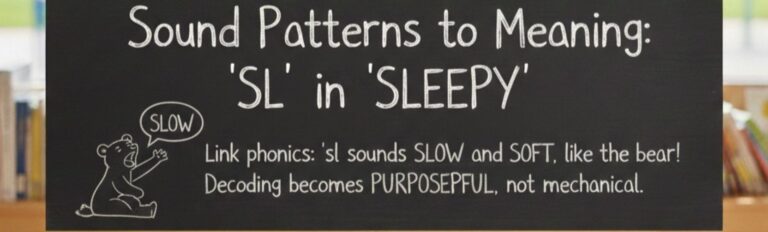
Link phonics patterns to the story: “‘sl’ in sleepy even sounds slow and soft — just like the bear!”
When children connect sound patterns to meaning, decoding becomes purposeful, not mechanical.
More examples:
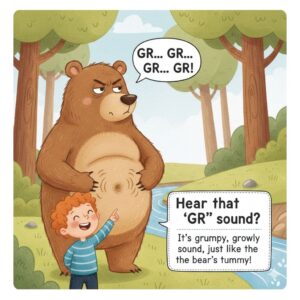
- “Hear that ‘gr’ sound? It’s a grumpy, growly sound, just like the bear’s tummy!”
- “‘Splash’ has that quick ‘spl’ at the start — just like water splashing fast!”
- “‘Sneak’ starts so quietly with ‘sn’ — perfect for sneaking!”
Teach Helpful Prompts
3. Teach Helpful Prompts
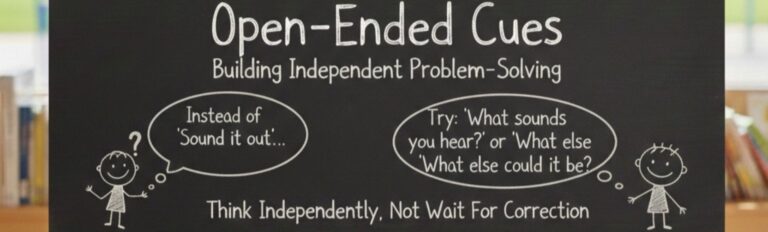
When your child catches and fixes a mistake, spotlight it:
“You figured that out all by yourself!”
These moments build confidence, flexibility, and pride in their growing skills.
Other celebration phrases:
- “I saw you fix that! That’s what good readers do.”
- “You didn’t give up — you kept trying until it made sense!”
- “You used the picture AND the sounds. Smart thinking!”

Celebrate Self-Corrections
4. Celebrate Self-Corrections
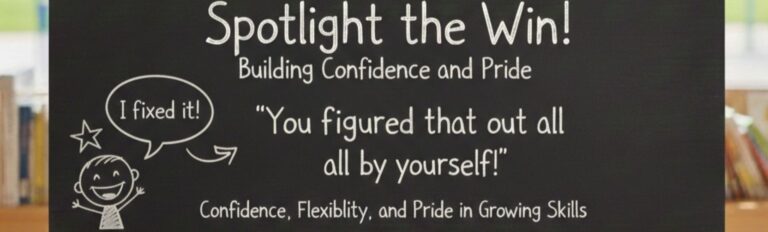
Instead of just saying “Sound it out,” use open-ended cues that build problem-solving skills. These help your child think independently instead of waiting for correction.
| Instead of… | Try Saying… |
| “Sound it out.” | “What’s the first sound?” or “Let’s slide through the sounds.” |
| “No, that’s wrong.” | “Does that sound right?” or “Look at the picture. Does that make sense?” |
| (Immediately giving the word) | “Let’s look at the first two letters. What do they say together?” |
| “You know this word!” | “Try that word again.” or “Point to the sounds as you say them.” |
1. Spot & Pause Strategically
Choose 2–3 “juicy” words per reading. Pause briefly, invite your child to look at the first letter(s), blend the sounds together, and then move on. → Small, frequent moments of decoding work better (and feel lighter) than long interruptions.
What is a “Juicy Word”?
A “juicy word” is a word in the story that your child can realistically decode based on the phonics skills they are currently learning. If they know ‘sh’ and ‘p’, the word ship is juicy. The word ocean is not… yet!
Great Books for This Technique
Beginning Decoders (CVC words):
- “The Cat Sat” by various authors – Juicy words: cat, sat, mat, hat
- “Hop on Pop” by Dr. Seuss – Juicy words: hop, pop, cup, pup
- “Sam and the Big Dig” (BOB Books series) – Juicy words: dig, big, Sam
Emerging Readers (blends & digraphs):
- “Don’t Let the Pigeon Drive the Bus!” by Mo Willems – Juicy words: stop, drive, bus
- Any “Elephant & Piggie” book by Mo Willems – Juicy words: splat, friend, thank
- “Click, Clack, Moo” by Doreen Cronin – Juicy words: click, clack, duck
The key? Pick ANY book your child loves and find 2-3 words that match their current skills.
2. Connect Sounds to Meaning
Link phonics patterns to the story: “‘sl’ in sleepy even sounds slow and soft — just like the bear!”
When children connect sound patterns to meaning, decoding becomes purposeful, not mechanical.
More examples:
- “Hear that ‘gr’ sound? It’s a grumpy, growly sound, just like the bear’s tummy!”
- “‘Splash’ has that quick ‘spl’ at the start — just like water splashing fast!”
- “‘Sneak’ starts so quietly with ‘sn’ — perfect for sneaking!”
3. Teach Helpful Prompts
When your child catches and fixes a mistake, spotlight it:
“You figured that out all by yourself!”
These moments build confidence, flexibility, and pride in their growing skills.
Other celebration phrases:
- “I saw you fix that! That’s what good readers do.”
- “You didn’t give up — you kept trying until it made sense!”
- “You used the picture AND the sounds. Smart thinking!”
4. Celebrate Self-Corrections
Instead of just saying “Sound it out,” use open-ended cues that build problem-solving skills. These help your child think independently instead of waiting for correction.
| Instead of… | Try Saying… |
| “Sound it out.” | “What’s the first sound?” or “Let’s slide through the sounds.” |
| “No, that’s wrong.” | “Does that sound right?” or “Look at the picture. Does that make sense?” |
| (Immediately giving the word) | “Let’s look at the first two letters. What do they say together?” |
| “You know this word!” | “Try that word again.” or “Point to the sounds as you say them.” |
What This Can Look Like
Here is a mini-script to show how quick and seamless this can be:
- (Parent reads): “The little bear started to feel very…”
2. (Parent pauses, points to the word sleepy): “Here’s that ‘sl’ word we saw. Let’s try sliding through it…”
3. (Child): “/sl/…eep…y. Sleepy!”
4. (Parent): “Exactly! He felt sleepy. Let’s see what he does next…”

The Juicy Word Story
Maya’s Story
Maya almost didn’t open the book that evening.
It had been a long Tuesday. Soccer practice. Homework. A minor meltdown over a banana that had touched the wrong part of the plate. By 7:15, the last thing she felt like doing was wrestling with her seven-year-old son Eli over reading time.
But the book was already on the couch — Click, Clack, Moo — and Eli had carried it in himself, which felt like a small miracle.
“Okay,” she said, dropping down beside him. “Let’s see what these cows are up to.”
Two pages in, she spotted it. Click. A word Eli had been working on. Short, decodable, the perfect size for him right now.
She didn’t stop. She kept reading.
“…the cows kept typing. Click, clack, click, clack…”
She paused at click and pointed to it lightly. “There’s that sound again. What do you think it starts with?”
Eli looked at it. “/kl/… click!” He grinned — not because he’d gotten it right, but because the cows had said the word and now HE had said the word, and somehow that felt like being in on a secret.
Maya kept going.
She didn’t stop at every word. She didn’t circle anything in pencil or make him spell it backward or forward. She just read. And twice more, when a word came up that she knew was in his wheelhouse — duck, and then moo (which made him dissolve into giggles) — she paused for just a breath, pointed, and let him take it.
Three words. The whole book.
Then, near the end, something happened that Maya hadn’t planned for.
Eli read the word typewriter as typewater.
Before she could say anything, he stopped himself.
“Wait.” He looked at it again. “Type… writer.
Typewriter.”
He looked up at her, eyes wide.
“I fixed it!”
Maya felt something loosen in her chest. “You did. You caught that all by yourself. That’s exactly what good readers do.”
He wanted to find the word again on the page. Then he wanted to say typewriter three more times, fast, because it was fun. Then he asked if cows could actually type, which led to a five-minute conversation about hooves and keyboards that had nothing to do with reading and everything to do with a kid who was fully, happily inside a story.
Later, after Eli was asleep, Maya thought about the old version of reading time — the version where she stopped at every hard word, where her voice got tight when he guessed wrong, where the book became something to get through rather than something to enjoy.
She hadn’t known, then, that three words was enough. That pausing for two seconds was more powerful than a full correction. That the moment he fixed his own mistake was worth more than anything she could have said.
She hadn’t known that the story was the whole point — and that phonics, tucked carefully inside it, could feel like play.
The lesson: Phonics doesn’t need its own moment. It lives best inside the story, in the small pauses, the pointed finger, the word your child can almost reach. Two or three well-chosen words per book, held lightly, do more than a page full of corrections ever could.
Try This
Choose one of these activities for your next read-aloud:
Activity 1 – The Repeating Word

Activity 1: The Repeating Word
Pick one decodable word that repeats often (like hop in a book about bunnies). Ask: “What sound does it start with?” Whisper it together. Each time you spot the word, tap it gently and let them read it.
Activity 2 – Build it, Then Find it

Activity 2: Build It, Then Find It
Before you read, pick one key, decodable word from the story (e.g., splash).
-
-
Build it: Use letter magnets to build s-p-l-a-sh. Talk about the ‘spl’ blend and the ‘sh’ sound.
-
Find it: Say, “We are going to be detectives and find this word in our story! Keep your eyes open for splash.”
-
Celebrate: When you get to that page, let them “find” and read the word they already practiced.
-
Why this works: Pre-teaching one word builds confidence and makes them feel like expert readers!
Activity 3 – The Silly Sounds Swap

Activity 3: The Silly Sounds Swap
This builds awareness of meaning. When you get to a simple word, read it wrong on purpose with a different first sound.
Example: “The cat sat on the… bat.”
Let your child catch the mistake. “No, it’s mat!”
You say: “Oh, you’re right! How did you know? That’s right, it starts with /m/, not /b/. And ‘bat’ wouldn’t make sense!”
Why this works: This reinforces using both meaning and phonics. Plus, kids LOVE catching you making mistakes!
Activity 4 – Sound Pattern Hunt

Activity 4: Sound Pattern Hunt
Best for: Children who have mastered 3-4 phonics patterns
Before reading, pick ONE pattern (like ‘sh’ or ‘ing’). Give your child 5 sticky notes. Their job? Find 5 words with that pattern throughout the book. Each time they find one, they get to place a sticky note and read the word. At the end, count up their “word treasures.”
Variations:
- Easy: Just find the pattern (don’t have to read the whole word)
- Challenge: Find the pattern AND use the word in a sentence
Activity 5 – Author’s Word Choice

Activity 5: Author’s Word Choice
Best for: Children ready to think beyond decoding
After decoding a juicy word, ask: “Why do you think the author picked THIS word? Could they have used a different word?”
Example: If the word is “gigantic” and your child decodes it, say: “You read ‘gigantic’! The author could have said ‘big.’ Why did they pick ‘gigantic’ instead?”
Why this works: This connects decoding to meaning and author’s craft — deepening comprehension!
Activity 6 – The Pointing Game

Activity 6: The Pointing Game
Best for: Very beginning decoders who need more confidence
YOU do all the reading, but your child gets to point to all the words that start with a specific sound. “You’re in charge of all the /b/ words today!” When you get to one, pause and let them point and say the sound. Eventually transition to having them read the whole word.
Why this works: Low-pressure way to practice sound recognition without the full cognitive load of decoding.
Activity 7 – Personal Word Collection

Activity 7: Personal Word Collection
Best for: Building ownership and excitement
Create a “Words I Can Read” jar or notebook. Every time your child successfully decodes a juicy word, write it on a slip of paper and add it to their collection. Once a week, pick 3-5 slips and let them read their words back. Watch their confidence soar!
Why this works: Visual representation of progress. Kids LOVE seeing their jar fill up!
Activity 8 – The Partner Echo

Activity 8: The Partner Echo
Best for: Building fluency after decoding
When your child decodes a word successfully (even if slowly), say: “Let me hear that word three times, faster each time!”
- First time: slow and careful
- Second time: a bit smoother
- Third time: like they’re saying it in the story
Why this works: Bridges from decoding to fluent reading — helps words “stick”!
Activity 1: The Repeating Word
Pick one decodable word that repeats often (like hop in a book about bunnies). Ask: “What sound does it start with?” Whisper it together. Each time you spot the word, tap it gently and let them read it.
Activity 2: Build It, Then Find It
Before you read, pick one key, decodable word from the story (e.g., splash).
-
-
Build it: Use letter magnets to build s-p-l-a-sh. Talk about the ‘spl’ blend and the ‘sh’ sound.
-
Find it: Say, “We are going to be detectives and find this word in our story! Keep your eyes open for splash.”
-
Celebrate: When you get to that page, let them “find” and read the word they already practiced.
-
Why this works: Pre-teaching one word builds confidence and makes them feel like expert readers!
Activity 3: The Silly Sounds Swap
This builds awareness of meaning. When you get to a simple word, read it wrong on purpose with a different first sound.
Example: “The cat sat on the… bat.”
Let your child catch the mistake. “No, it’s mat!”
You say: “Oh, you’re right! How did you know? That’s right, it starts with /m/, not /b/. And ‘bat’ wouldn’t make sense!”
Why this works: This reinforces using both meaning and phonics. Plus, kids LOVE catching you making mistakes!
Activity 4: Sound Pattern Hunt
Best for: Children who have mastered 3-4 phonics patterns
Before reading, pick ONE pattern (like ‘sh’ or ‘ing’). Give your child 5 sticky notes. Their job? Find 5 words with that pattern throughout the book. Each time they find one, they get to place a sticky note and read the word. At the end, count up their “word treasures.”
Variations:
- Easy: Just find the pattern (don’t have to read the whole word)
- Challenge: Find the pattern AND use the word in a sentence
Activity 5: Author’s Word Choice
Best for: Children ready to think beyond decoding
After decoding a juicy word, ask: “Why do you think the author picked THIS word? Could they have used a different word?”
Example: If the word is “gigantic” and your child decodes it, say: “You read ‘gigantic’! The author could have said ‘big.’ Why did they pick ‘gigantic’ instead?”
Why this works: This connects decoding to meaning and author’s craft — deepening comprehension!
Activity 6: The Pointing Game
Best for: Very beginning decoders who need more confidence
YOU do all the reading, but your child gets to point to all the words that start with a specific sound. “You’re in charge of all the /b/ words today!” When you get to one, pause and let them point and say the sound. Eventually transition to having them read the whole word.
Why this works: Low-pressure way to practice sound recognition without the full cognitive load of decoding.
Activity 7: Personal Word Collection
Best for: Building ownership and excitement
Create a “Words I Can Read” jar or notebook. Every time your child successfully decodes a juicy word, write it on a slip of paper and add it to their collection. Once a week, pick 3-5 slips and let them read their words back. Watch their confidence soar!
Why this works: Visual representation of progress. Kids LOVE seeing their jar fill up!
Activity 8: The Partner Echo
Best for: Building fluency after decoding
When your child decodes a word successfully (even if slowly), say: “Let me hear that word three times, faster each time!”
- First time: slow and careful
- Second time: a bit smoother
- Third time: like they’re saying it in the story
Why this works: Bridges from decoding to fluent reading — helps words “stick”!
Challenge Activity:
“Teach Me” Time
Once your child is confident with a phonics pattern, let THEM be the teacher. They pick a juicy word for YOU to decode, and you deliberately read it slowly (modeling decoding) or make a small mistake for them to catch.
Why this works: This role reversal is incredibly empowering and cements their learning!
When Things Get Tricky
Tricky Things: When Reading Doesn’t Look Like You Expected
Here’s what nobody tells you about early reading:
Kids who are learning to read do all sorts of things that look “wrong” but are actually perfectly normal—even smart—strategic behaviors.
Your child might be:
- Memorizing favorite books word-for-word (and “reading” them flawlessly… until you point to a random page)
- Guessing based on pictures or first letters instead of decoding the whole word
- Getting frustrated and giving up when reading feels hard
- Decoding perfectly but having no idea what they just read
- Taking forever to sound out every single word, making reading exhausting
And you might be thinking: “Am I doing something wrong? Should I correct this? Is this a red flag?”
Here’s the truth:
These behaviors are information, not failure. They tell you exactly what your child needs next—and most of them resolve naturally with the right support.
In this section, you’ll find:
→ Why each behavior happens (the developmental reason)
→ When it’s normal vs. when to adjust your approach
→ Specific strategies to support your child through each phase
→ How to respond with connection, not correction
The goal isn’t perfection. It’s progress.
Click any tab to learn what’s really happening—and what to do about it.

“My child gets frustrated and gives up”
Pull back to 1 word per page, or even 1 word per book. Make it ridiculously easy for a few days to rebuild confidence. Consider choosing words they’ve already practiced with letter tiles before reading.

“They want to just memorize the whole book”
→ That’s wonderful! Memory is part of reading. After they “read” from memory, go back and say, “Let’s be word detectives and find the word that starts with /s/.”

“They’re guessing based on pictures, not decoding”
→ This is actually a GOOD reading strategy! Say: “You’re right, it IS a dog! Now let’s check — does that word start with /d/? Let’s look together.” You’re validating their meaning-making while adding phonics.

“They can decode but don’t understand what they read”
→ Do more of the reading yourself. Let them decode 2-3 words while you handle the rest, then discuss the story together. Comprehension always comes first. Decoding is just the tool to get to meaning.

“This is taking forever!”
→ You might be stopping too often. Remember: only 2-3 words per book! Some days, just read for pure enjoyment with zero decoding practice. Balance is key.
Tricky Things: When Reading Doesn’t Look Like You Expected
Here’s what nobody tells you about early reading:
Kids who are learning to read do all sorts of things that look “wrong” but are actually perfectly normal—even smart—strategic behaviors.
Your child might be:
- Memorizing favorite books word-for-word (and “reading” them flawlessly… until you point to a random page)
- Guessing based on pictures or first letters instead of decoding the whole word
- Getting frustrated and giving up when reading feels hard
- Decoding perfectly but having no idea what they just read
- Taking forever to sound out every single word, making reading exhausting
And you might be thinking: “Am I doing something wrong? Should I correct this? Is this a red flag?”
Here’s the truth:
These behaviors are information, not failure. They tell you exactly what your child needs next—and most of them resolve naturally with the right support.
In this section, you’ll find:
→ Why each behavior happens (the developmental reason)
→ When it’s normal vs. when to adjust your approach
→ Specific strategies to support your child through each phase
→ How to respond with connection, not correction
The goal isn’t perfection. It’s progress.
Click any tab to learn what’s really happening—and what to do about it.
“My child gets frustrated and gives up”
Pull back to 1 word per page, or even 1 word per book. Make it ridiculously easy for a few days to rebuild confidence. Consider choosing words they’ve already practiced with letter tiles before reading.
“They want to just memorize the whole book”
→ That’s wonderful! Memory is part of reading. After they “read” from memory, go back and say, “Let’s be word detectives and find the word that starts with /s/.”
“They’re guessing based on pictures, not decoding”
→ This is actually a GOOD reading strategy! Say: “You’re right, it IS a dog! Now let’s check — does that word start with /d/? Let’s look together.” You’re validating their meaning-making while adding phonics.
“They can decode but don’t understand what they read”
→ Do more of the reading yourself. Let them decode 2-3 words while you handle the rest, then discuss the story together. Comprehension always comes first. Decoding is just the tool to get to meaning.
“This is taking forever!”
→ You might be stopping too often. Remember: only 2-3 words per book! Some days, just read for pure enjoyment with zero decoding practice. Balance is key.
Progress Indicators
Signs Your Child is Ready to Level Up:
-
Decodes those 2-3 words quickly and confidently -
Self-corrects without prompting -
Starts noticing patterns on their own (“Hey! That’s another ‘sh’ word!”) -
Asks to decode more words -
Remembers words from previous readings
Next Steps:

Increase to 3-5 words per book

Choose words with more complex patterns (vowel teams, r-controlled vowels)

Let them lead (“Which word should we try?”)

Move to longer books with chapters
Increase to 3-5 words per book
Choose words with more complex patterns (vowel teams, r-controlled vowels)
Let them lead (“Which word should we try?”)
Move to longer books with chapters
Common Pitfalls to Avoid
-
Stopping too often to correct -
Turning decoding into a quiz -
Focusing on every word instead of key patterns -
Forgetting to praise effort as much as accuracy -
Choosing words that are too hard (“Wait, let me learn this pattern first!”) -
Making it feel like homework instead of story time
Quick Check:
Did you …



If you checked 3+, you’re doing great! If not, pick just ONE to focus on tomorrow.
Reflection
Take a moment to reflect:
-
When did your child show the most excitement or pride while reading today? -
Was it during a “juicy word,” a self-correction, or a sound-to-story connection? -
Notice these moments. They’re showing you what lights them up as a reader. Follow that light.

By embedding phonics inside meaningful, joyful stories, you show your child that decoding is a tool for understanding, not a test of perfection.
Frequent, playful practice + warm encouragement = steady, confident growth.
“Every sound explored in context is another doorway into understanding. Keep it light, keep it joyful, and the learning will stick.” 