Activity 3.2 – Movement Translation
How to Bring Words to Life!
Movement Translation
Bring verbs to life through action!
When the Body Reads the Word
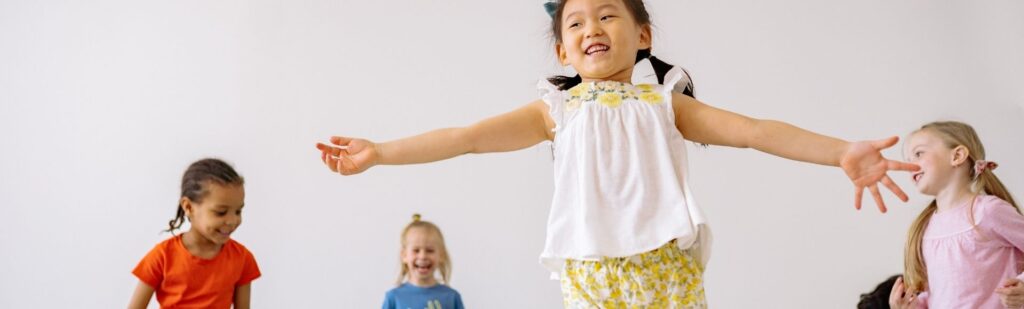
This activity helps children translate action words into movement, connecting language, imagination, and the body. When kids move as they read, they don't just hear words — they feel them. This builds comprehension, vocabulary, and focus — especially for wiggly readers!
Verbs are the engine of every story. They carry the energy, the emotion, and the momentum. By giving those words a physical home in the body, children remember them more deeply and understand them more fully. A word like creep means something different once you've felt your own feet slow and your breath hush.
This isn't about being a good dancer or a good actor — it's about play. And play is always the best teacher.
How to Use This Activity
-
1Pick one or two action words (verbs) from your story. Don't try to act out every word — one or two per session is plenty.
-
2Invite your child to act them out together. "Let's show what that word looks like!"
-
3Add a sound effect or facial expression if you like. It makes the word even more memorable — and brings in extra giggles.
-
4Celebrate effort, not accuracy. The goal is joyful connection, not choreography!
Movement Translation Table
Use these as starting points — your child's version is always the right version.
| Verb | Possible Movements | Add Sound? |
|---|---|---|
| Jump | Small hops in place | "Boing!" |
| Tiptoe | Soft, slow steps on the balls of your feet | "Shh…" |
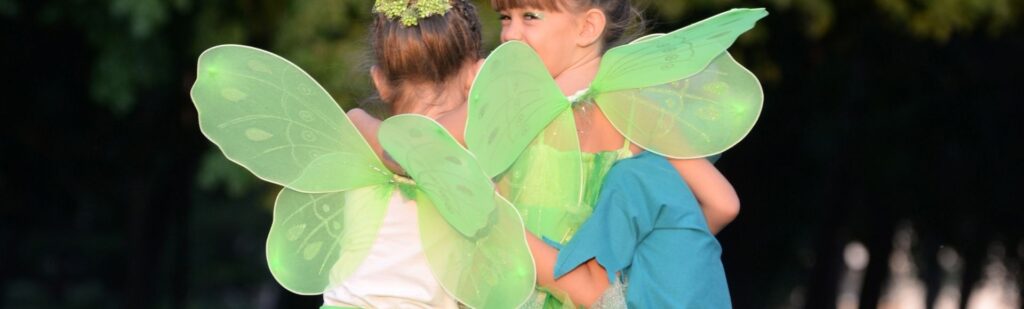
| Fly | Sweep arms wide like wings | Wind whoosh |
| Roar | Lean body forward, arms out wide | "ROAR!" |
| Stomp | Heavy, deliberate steps | "Thud! Thud!" |
| Stretch | Reach arms as high as possible | Big slow exhale |
| Gallop | Alternating high knees, rhythmic | "Clip-clop!" |
| Creep | Slow crawl or sliding steps, hunched | "Ssss…" |
| Spin | Turn slowly with arms out | Laugh or "Whee!" |
| Wave | Slow, flowing swirl of one arm | "Whoosh!" |
Try This After Your Read
After acting out a movement, pause and ask your child one of these questions. You don't need both — one is plenty.
Please click here to download the Activity – How to Bring Words to Life
Movement Translation
Bring verbs to life through action!
When the Body Reads the Word
This activity helps children translate action words into movement, connecting language, imagination, and the body. When kids move as they read, they don't just hear words — they feel them. This builds comprehension, vocabulary, and focus — especially for wiggly readers!
Verbs are the engine of every story. They carry the energy, the emotion, and the momentum. By giving those words a physical home in the body, children remember them more deeply and understand them more fully. A word like creep means something different once you've felt your own feet slow and your breath hush.
This isn't about being a good dancer or a good actor — it's about play. And play is always the best teacher.
How to Use This Activity
-
1Pick one or two action words (verbs) from your story. Don't try to act out every word — one or two per session is plenty.
-
2Invite your child to act them out together. "Let's show what that word looks like!"
-
3Add a sound effect or facial expression if you like. It makes the word even more memorable — and brings in extra giggles.
-
4Celebrate effort, not accuracy. The goal is joyful connection, not choreography!
Movement Translation Table
Use these as starting points — your child's version is always the right version.
| Verb | Possible Movements | Add Sound? |
|---|---|---|
| Jump | Small hops in place | "Boing!" |
| Tiptoe | Soft, slow steps on the balls of your feet | "Shh…" |
| Fly | Sweep arms wide like wings | Wind whoosh |
| Roar | Lean body forward, arms out wide | "ROAR!" |
| Stomp | Heavy, deliberate steps | "Thud! Thud!" |
| Stretch | Reach arms as high as possible | Big slow exhale |
| Gallop | Alternating high knees, rhythmic | "Clip-clop!" |
| Creep | Slow crawl or sliding steps, hunched | "Ssss…" |
| Spin | Turn slowly with arms out | Laugh or "Whee!" |
| Wave | Slow, flowing swirl of one arm | "Whoosh!" |
Try This After Your Read
After acting out a movement, pause and ask your child one of these questions. You don't need both — one is plenty.